Proven Growth Thesis: How we generated $12+ million for Fashion & Jewelry Brands in 2025 using our strategy

We have scaled hundreds of businessesto $1-5,000,000 per year, and you arenext. Watch the video to seehow we do it 👇
In 2025, the advertising world broke.
After 7 years of scaling large eCommerce brands, everything suddenly collapsed. Performance dropped hard — from a 5.1 ROAS to 1.6 almost overnight. And it wasn’t pretty.
That’s when we realized:
- You can’t scale by simply hunting for “winning audiences” anymore. Creative strategy has become the primary growth lever.
- Business profitability is driven by repeat purchases and customer LTV — not by ROAS.
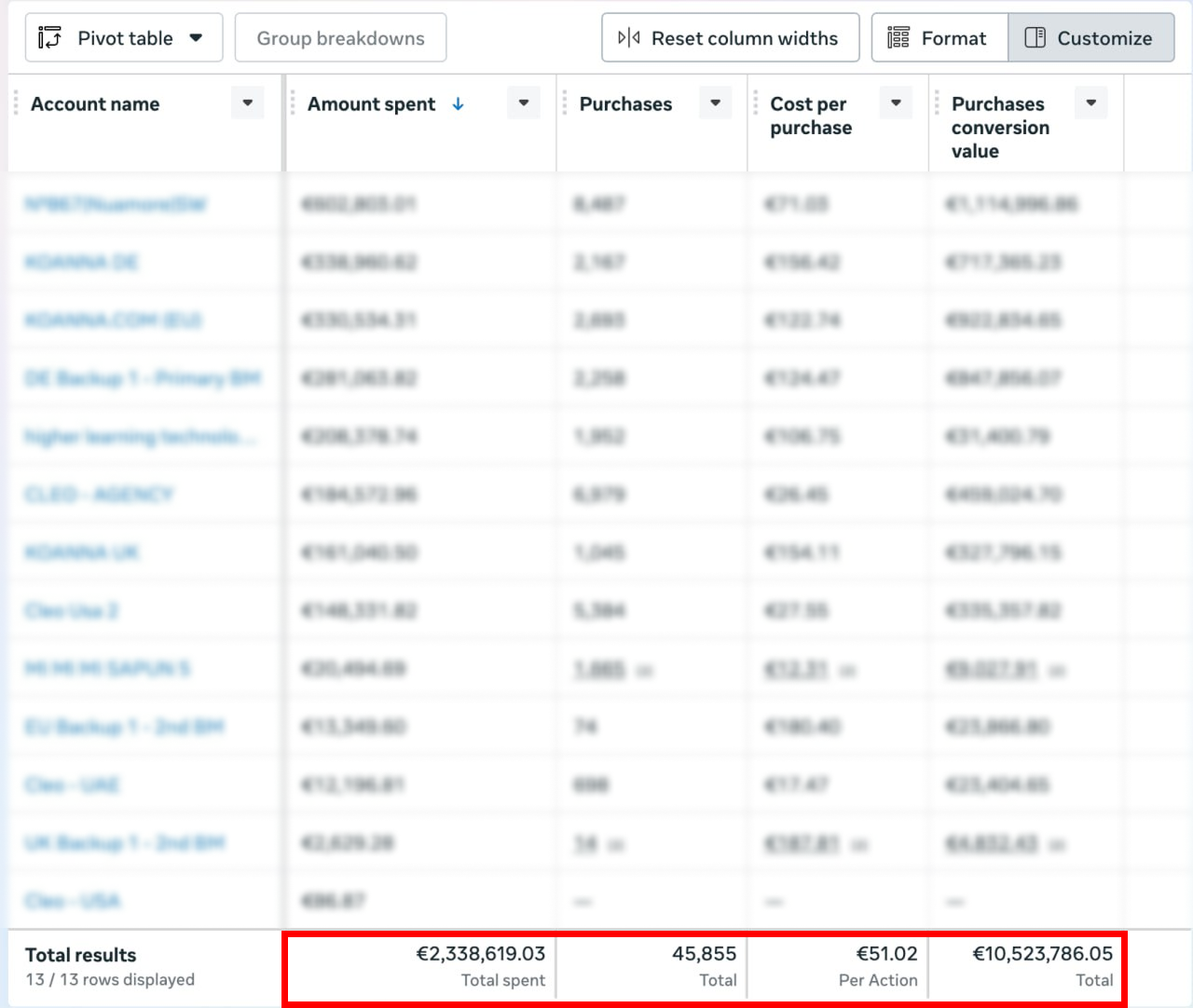
As a result we generated €10,523,786 or $12,159,198 for fashion brands 👇
Every day, I see businesses complaining about market changes, struggling to adapt to today’s marketing realities — and quietly losing money in the process.
Here are the core problems we consistently see:
- No clear creative strategy capable of turning paid ads into a profitable growth channel
- No internal structure or resources to manage creative production properly (and no, you don’t need dozens of creators)
- Broken unit economics that kill even winning campaigns at the root
- Obsession with “new creatives” without professional testing and scaling frameworks
- Weak retention strategy, with repeat customer rate below 30%
- Dependency on a single traffic channel, creating constant volatility and revenue instability
.png)
The market panicked and ran toward every new “algorithm update,” abandoning fundamentals and ignoring the fact that every business requires its own growth architecture.
- Reduced reliance on audiences is one change.
- But it’s far from the only force reshaping performance.
We can show you a brand that was less than a year old — and that we had to scale without a trained pixel, without an existing customer base, and without massive financial backing.
- No historical data.
- No warm audience.
- No “algorithm advantage.”
What we did have was a strategic approach.
This case demonstrates how we built a $5M revenue engine in a highly seasonal U.S. market, where the majority of demand is concentrated between March and May 👇
Yet even during off-season periods, the brand maintains strong contribution margins and sustainable returns — because the growth system is designed for stability, not just peak spikes.

Using verified data from the Triple Whale dashboard, the brand scaled to $4.5M+ in revenue in 2025 — more than doubling from just under $2M the previous year 👇

A brand that was generating under $100K per month was scaled to $400K per month through a clear creative strategy and a properly structured scaling framework 👇

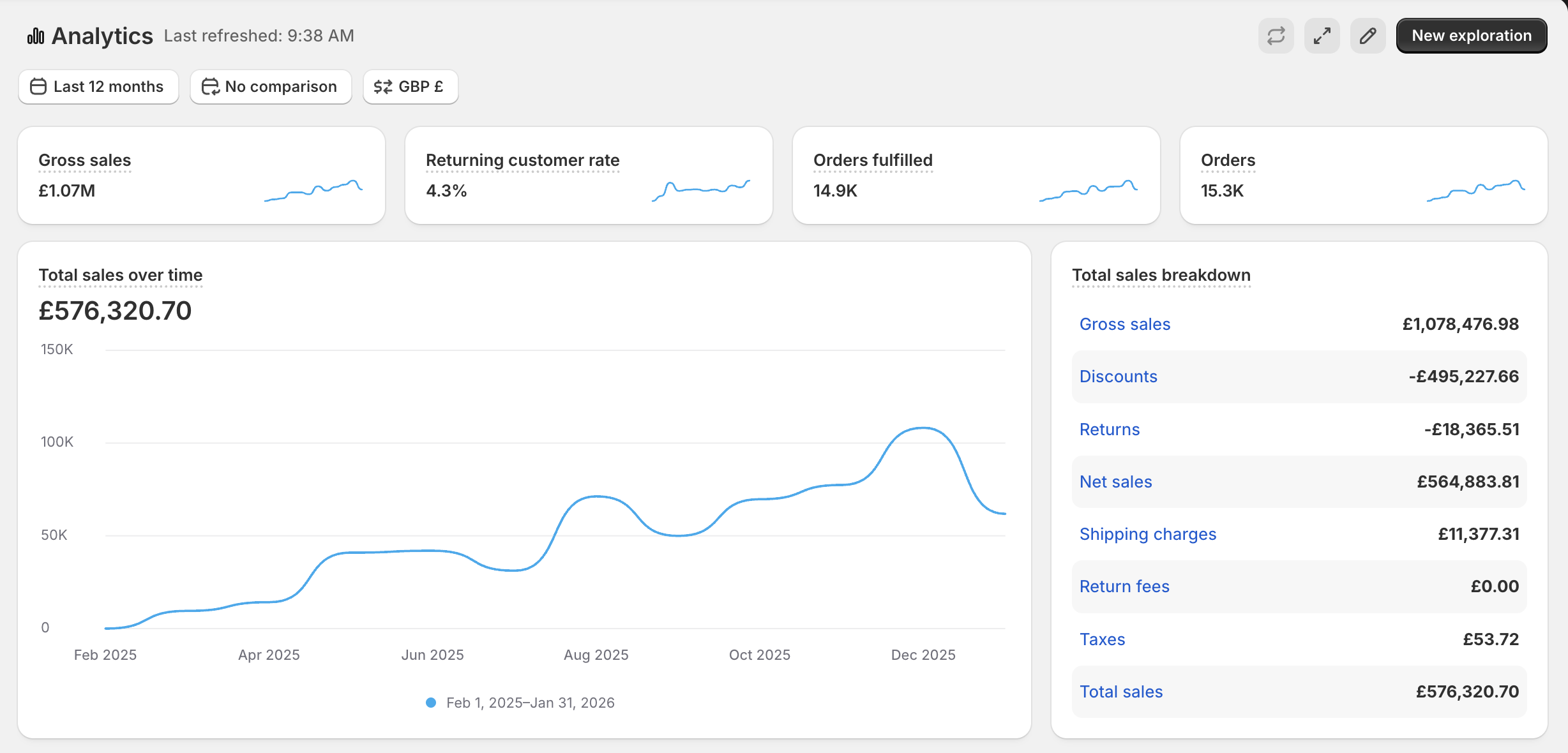
Scaled the brand from $50K to $270K in monthly revenue through Meta ads and email marketing, increasing blended ROAS from 1.7 to 2.5 and enabling profitable scaling 👇
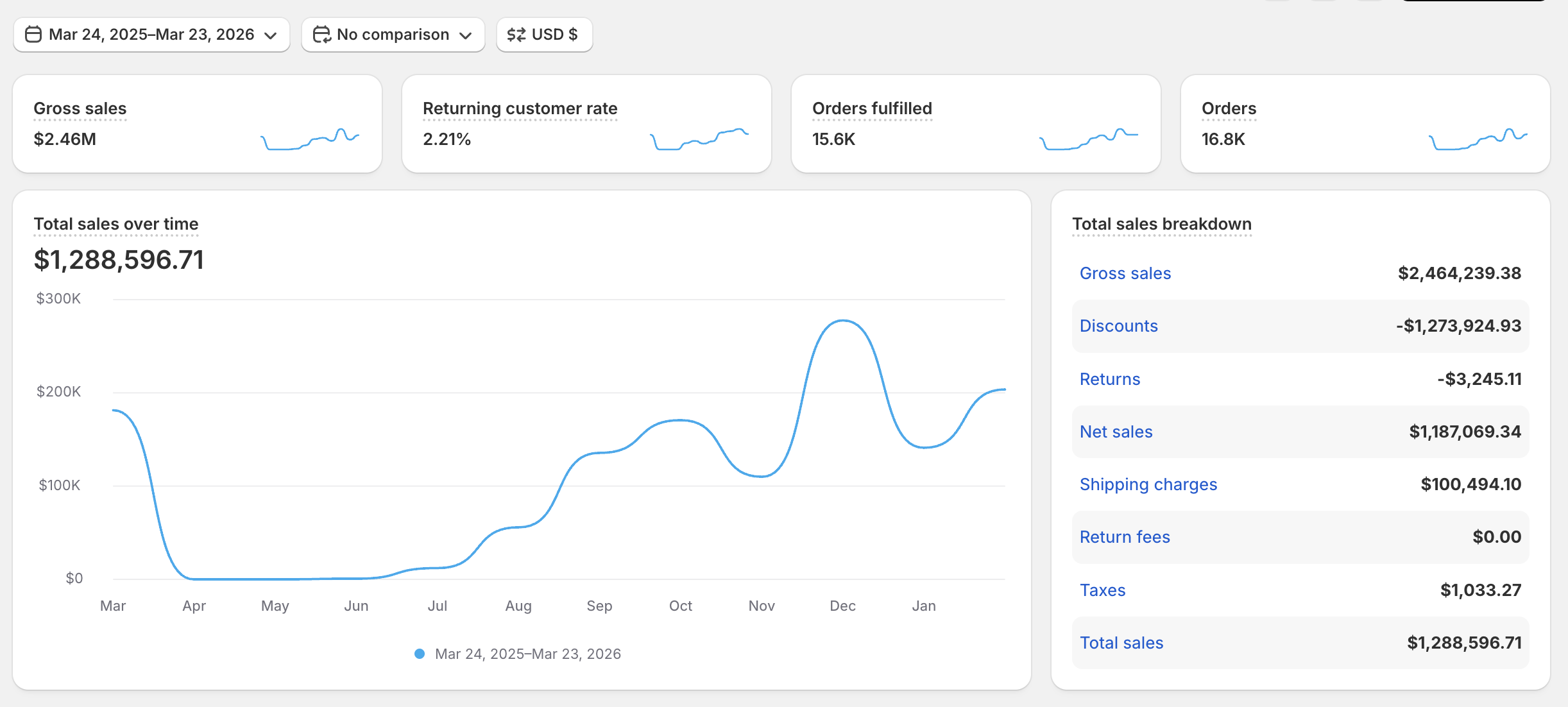
That alone led to $785,000 in revenue during the brand’s first year 👇 And in 2026, the target is a stable $2 million in annual revenue — built on a system, not luck.
Fashion isn’t just another vertical for us — it’s our specialization.
For more than 7 years, we’ve worked exclusively with fashion brands: from women’s apparel and dresses to men’s tailoring, footwear, and jewelry.
We understand seasonality, margin pressure, creative fatigue, return rates, and the emotional drivers behind fashion purchases — because this is the only arena we compete in.

$350k dollars in sales per month, testimonial from Lorenzo 👇
The 2026 Framework for Scaling Fashion Brands Profitably
There are no hacks. No secret audiences. No algorithm tricks.Some brands scale. Others claim the auction is “too competitive.” The real difference isn’t luck. It’s funnel architecture 👇
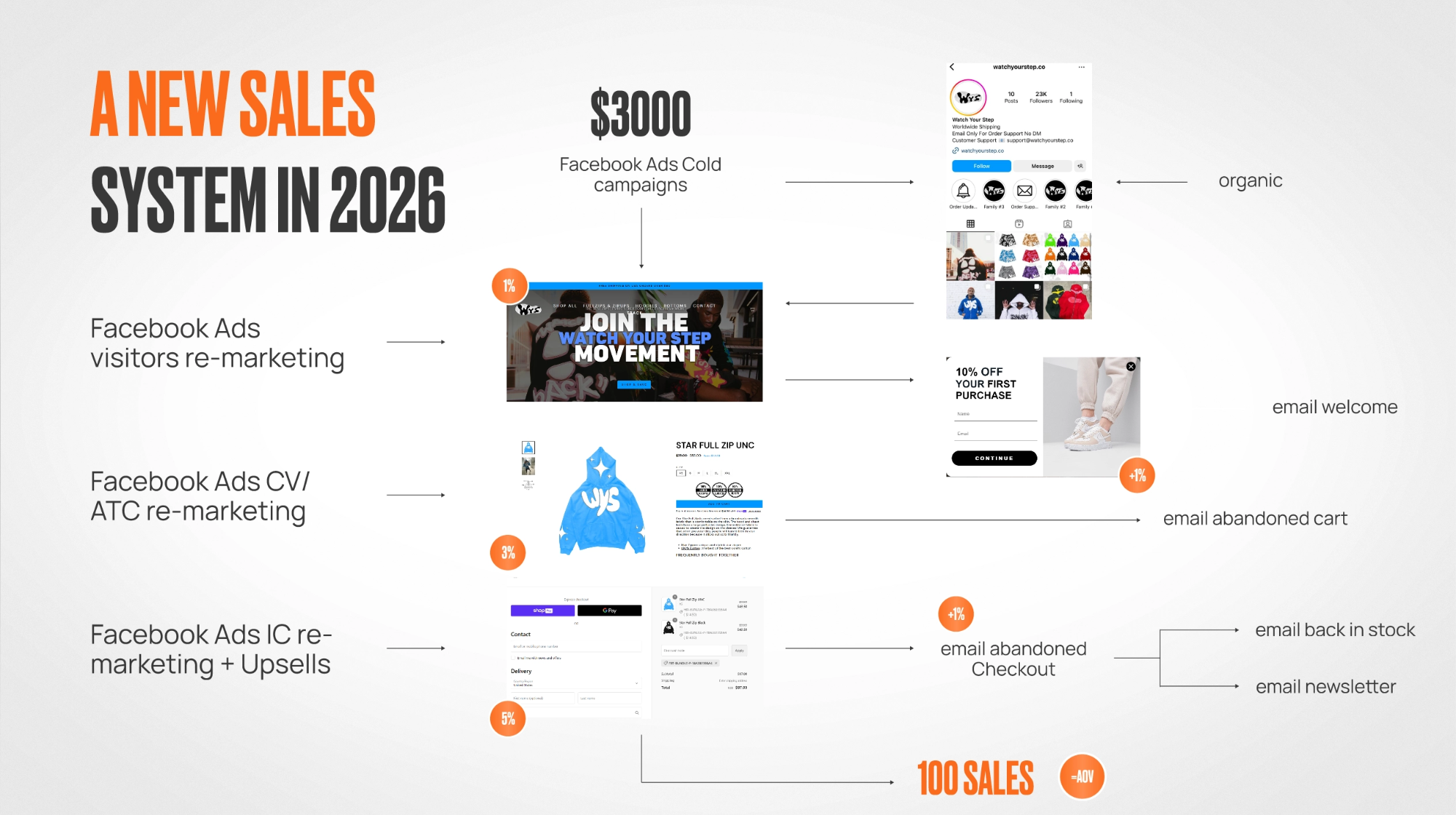
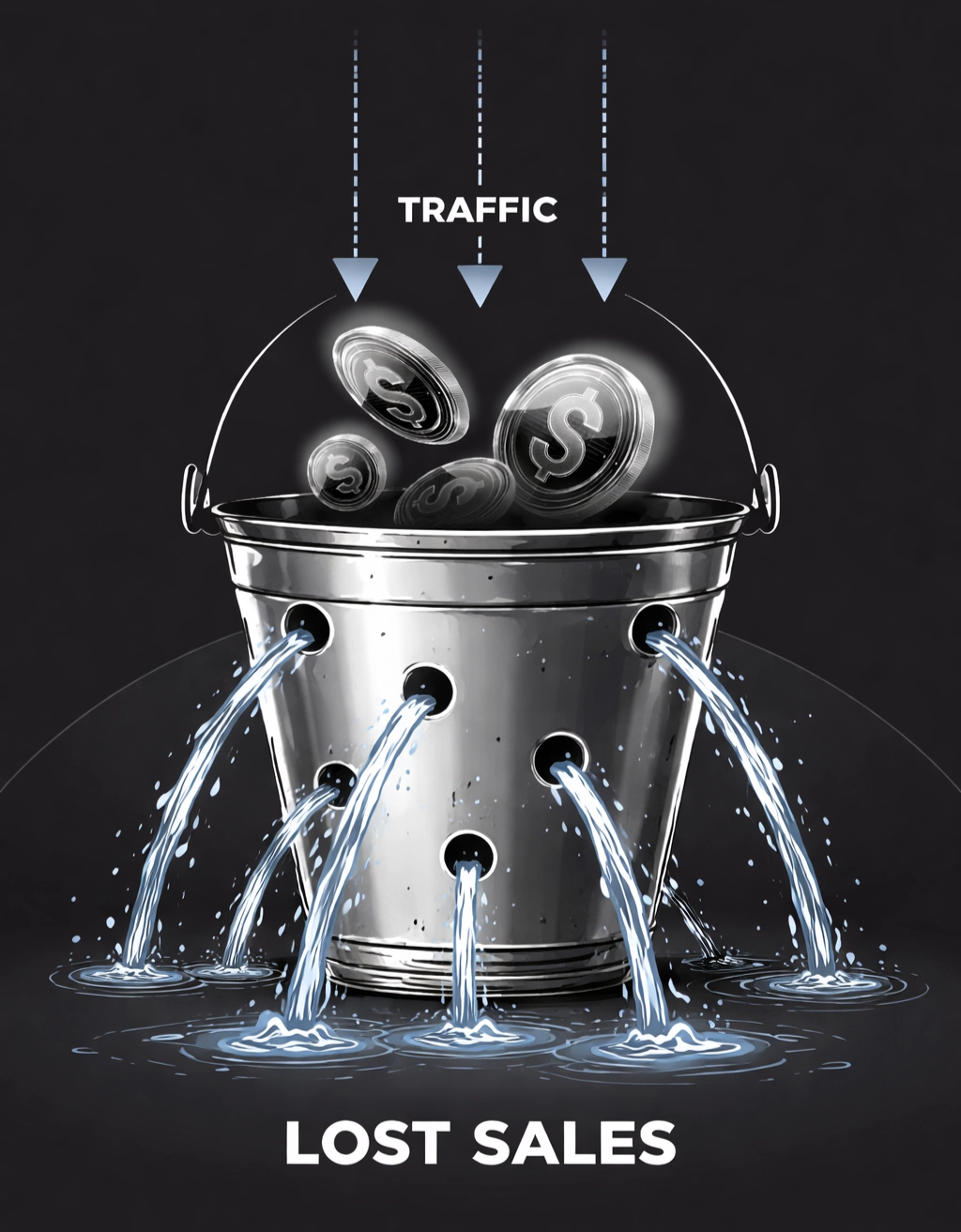
Ignoring parts of your funnel doesn’t make you efficient. It makes you blind.
You’ll keep trying to reduce CAC while competitors outbid you — and still stay more profitable.
Because they fixed the leaks. You’re still fighting the auction.
Here we are, Michael and Kate. We’re excited to meet you
as we’ve already generated over $50 million in sales for fashion brands over the past 7 years in this niche 👇👇👇

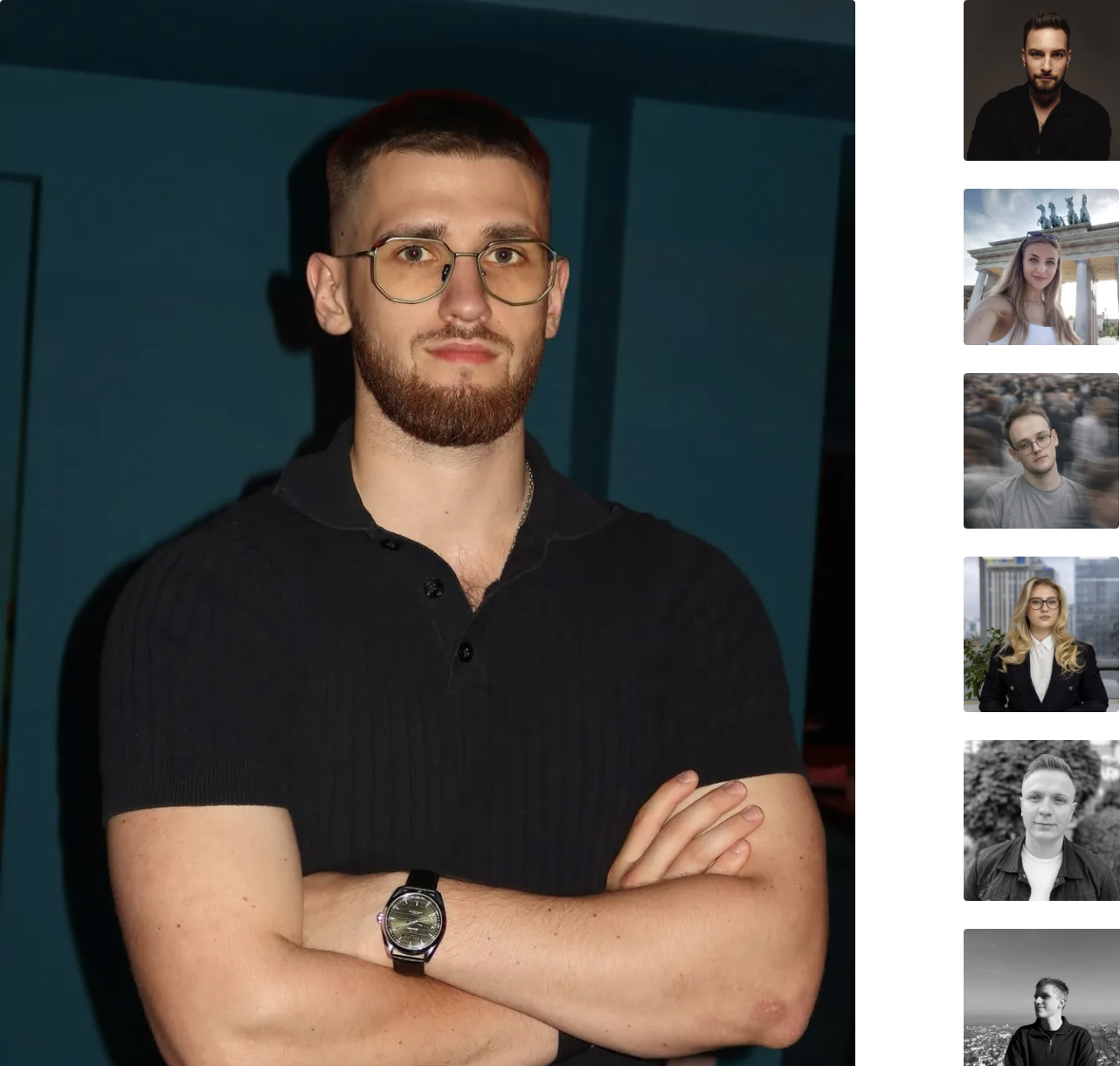
I’ll also introduce you to our small but professional team, which consistently generates over $1 million in sales every month for our partners.
Acquisition is simply the top of your funnel — and there are dozens of ways to approach it.
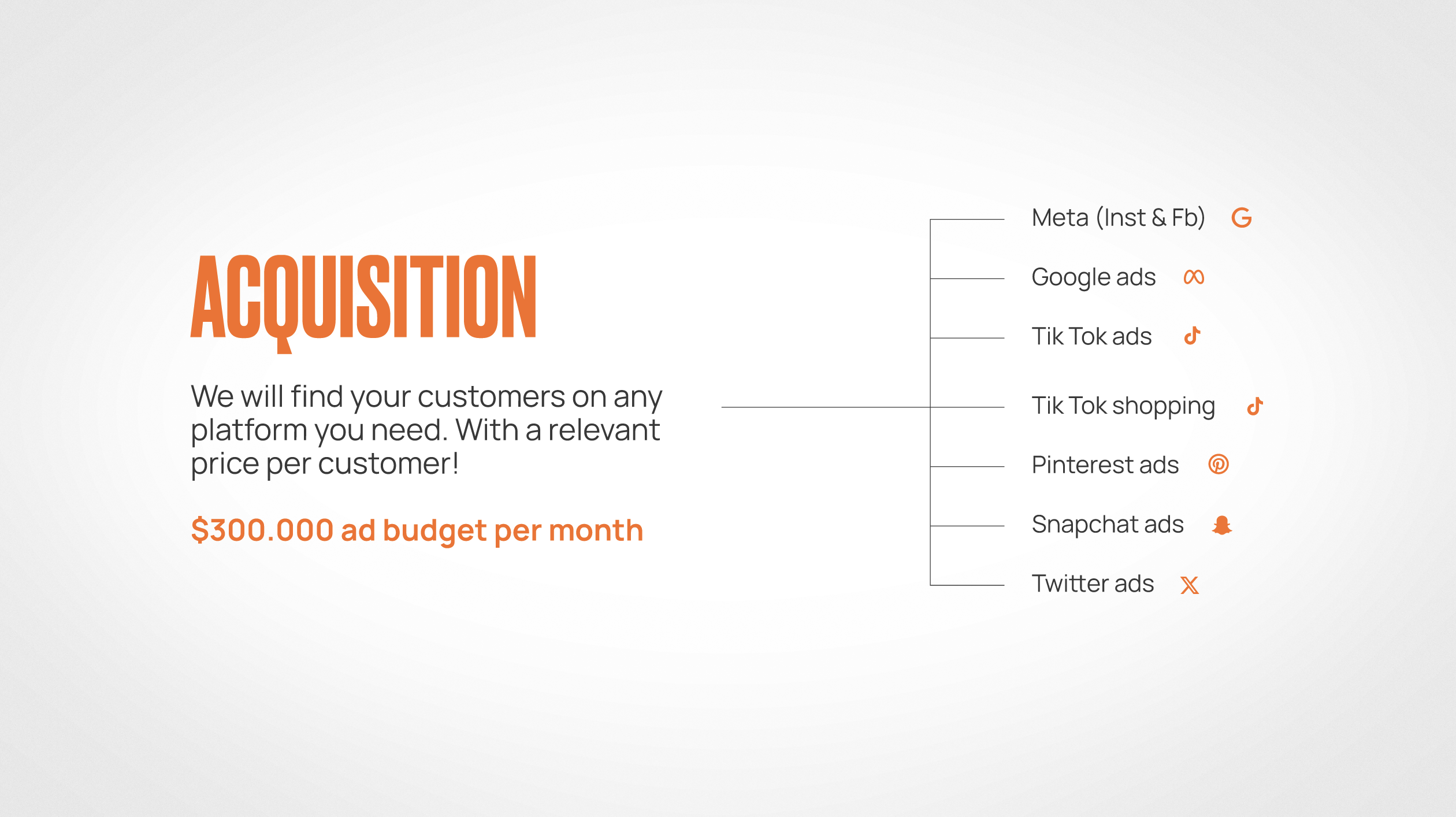
Meta Ads
the most proven and universal traffic source that works for a brand generating $10K in revenue and will remain relevant for a business doing over $1 million per month. (We have invested more than $10 million in Meta advertising.)
Google Ads
stability is its second name. It fits more established niches that have historical demand through search queries and works best when a brand is already doing $50K–$100K per month in sales. (We have invested more than $3 million in Google advertising.)
TikTok Ads
a young and relatively chaotic channel that requires strong control and is best suited for trend-driven products that can be naturally integrated into the platform. (We have invested more than $1 million in TikTok advertising.)
TikTok Shop
not direct sales through your website (similar to Amazon), but with a very powerful functionality to work with creators who can drive sales and boost product awareness. (We have generated more than $1 million in sales.)
Pinterest Ads
an ideal channel for fashion brands generating over $50K per month, giving the opportunity to unlock an additional $10K–$20K in monthly revenue. (We have invested more than $300K in Pinterest advertising.)
Snapchat and Twitter Ads
we always keep them on our radar as test channels, especially with promises from Elon Musk that Twitter will focus more on eCommerce brands, although so far we have not seen a strong consistent trend in that direction.
Increased sales by 2 times in 60 days, testimonial from Olivia👇
You’ve reached the gold mine. This is where we show the tools and levers that allow us to increase the performance of any fashion brand using our strategy:
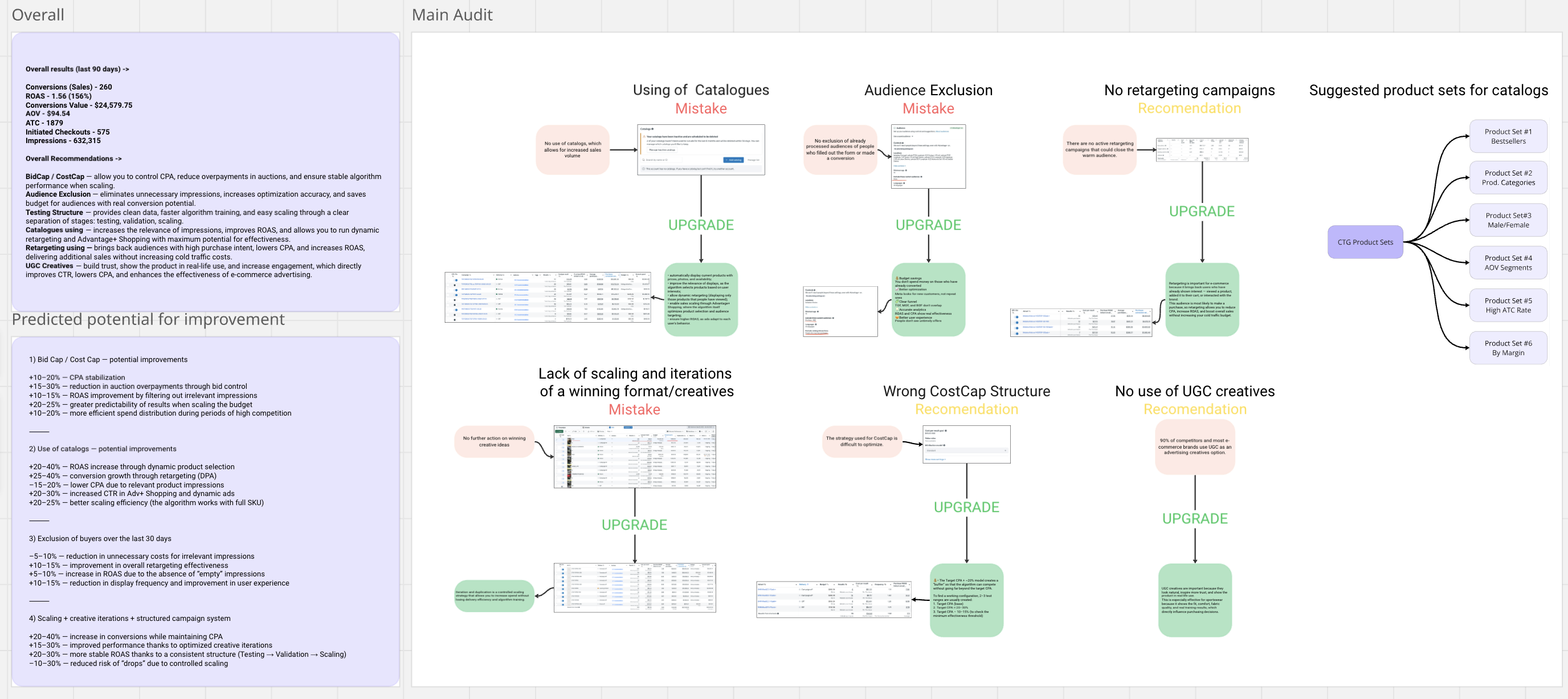
- Not using catalog managers is a primitive mistake.
Even beginners in advertising should implement them from day one to achieve stable and scalable results.
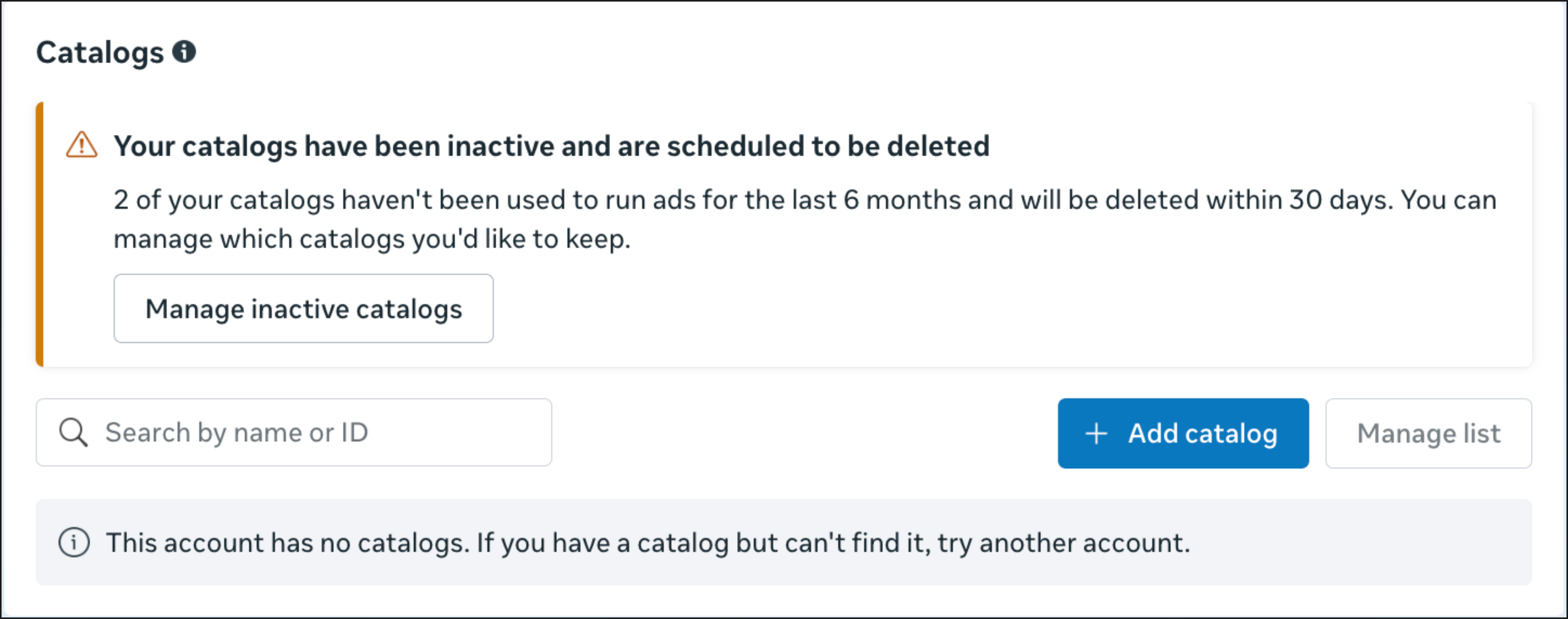
- automatically display current products with prices, photos, and availability;
- improve the relevance of displays, as the algorithm selects products based on user interests;
- allow dynamic retargeting (displaying only those products that people have viewed);
- enable sales scaling through Advantage+ Shopping, where the algorithm itself optimizes product selection and audience targeting;
- ensure higher ROAS, as ads adapt to each user's behavior.
Look at the results you’re leaving on the table 👇
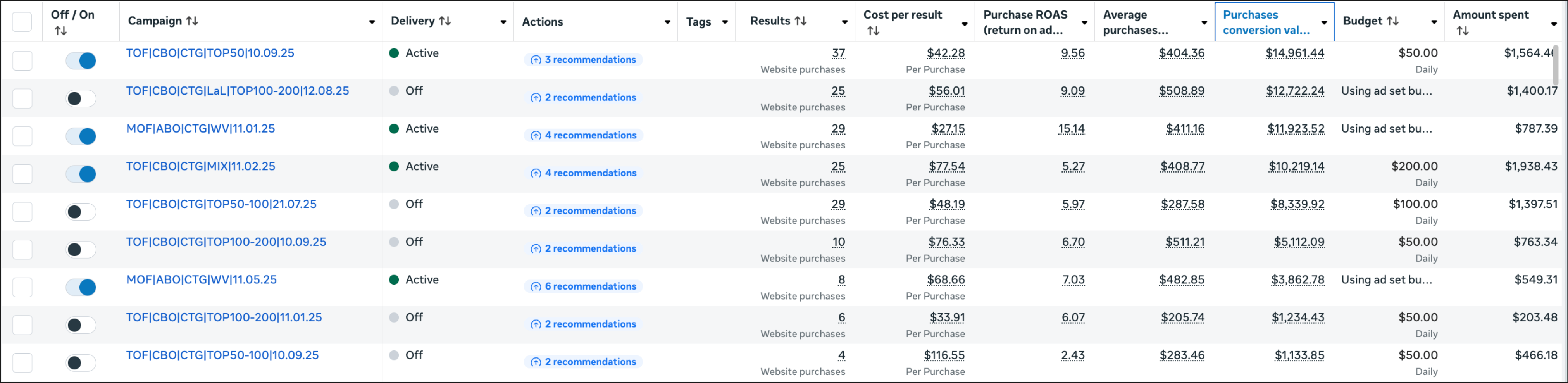
2. No exclusion of already processed audiences of people who filled out the form or made a conversion.
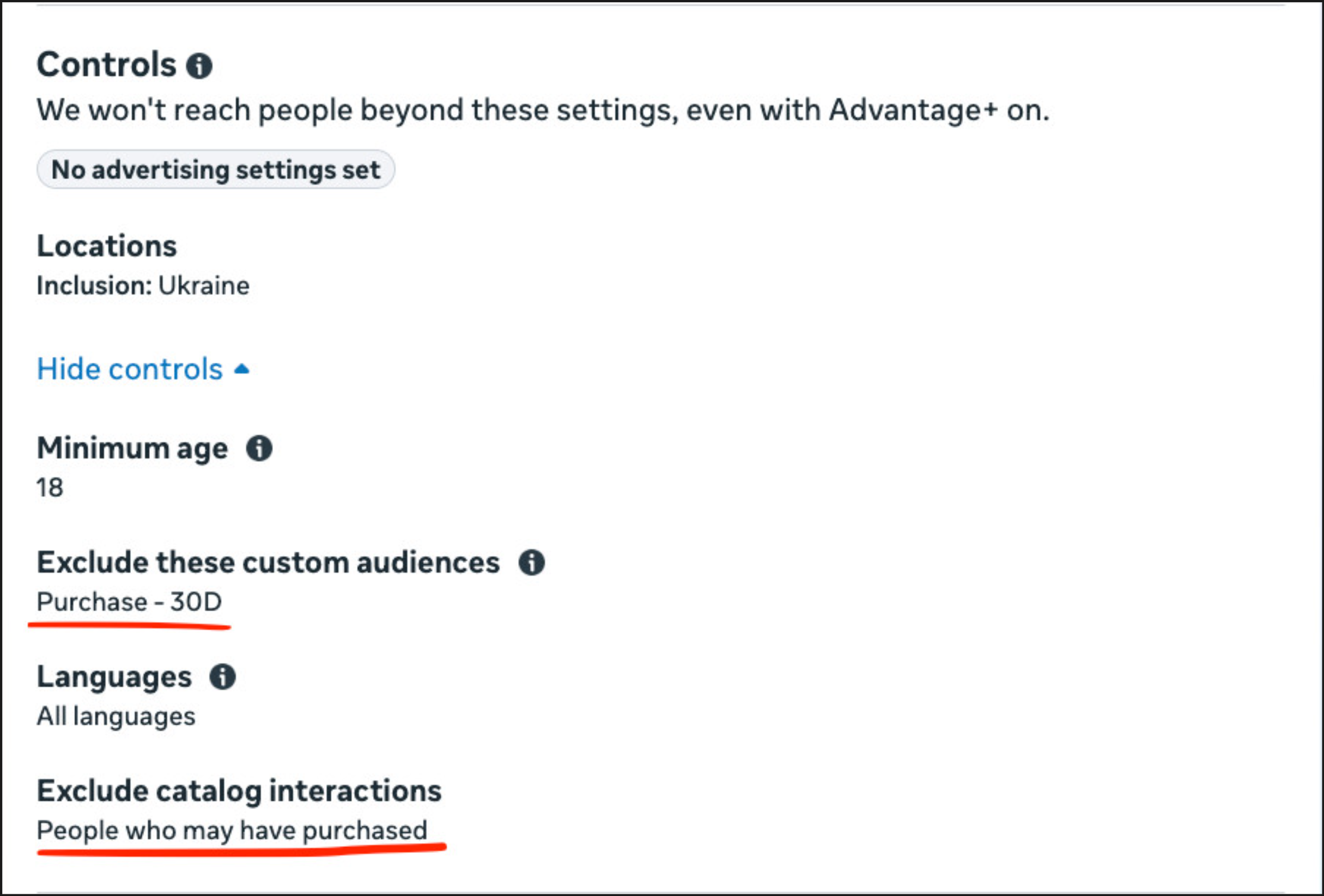
- Budget savings You don't spend money on those who have already converted
- Better optimization Meta looks for new customers, not repeat ones
- Clear funnel TOF, MOF, and BOF don't overlap
- Accurate analytics ROAS and CPA show real effectiveness
- Better user experience People don't see untimely offers
3. No further action on winning creative ideas. (You’re just duplicating ads instead of scaling properly through structured iterations — changing hooks, key elements, and CTAs)
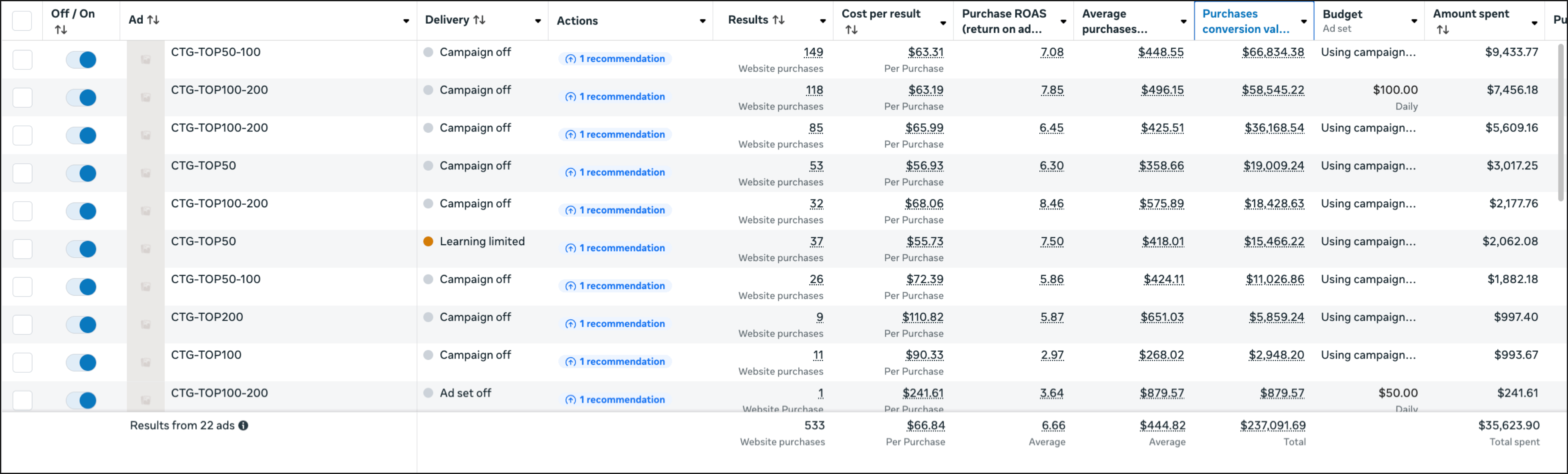
4. CostCap Scaling Structure. The Target CPA + ~20% model creates a “buffer” so that the algorithm can compete without going far beyond the target CPA.
To find a working configuration, 2–3 test ranges are usually created:
1. Target CPA (base)
2. Target CPA + 20–30%
3. Target CPA – 10–15% (to check the minimum effectiveness threshold)
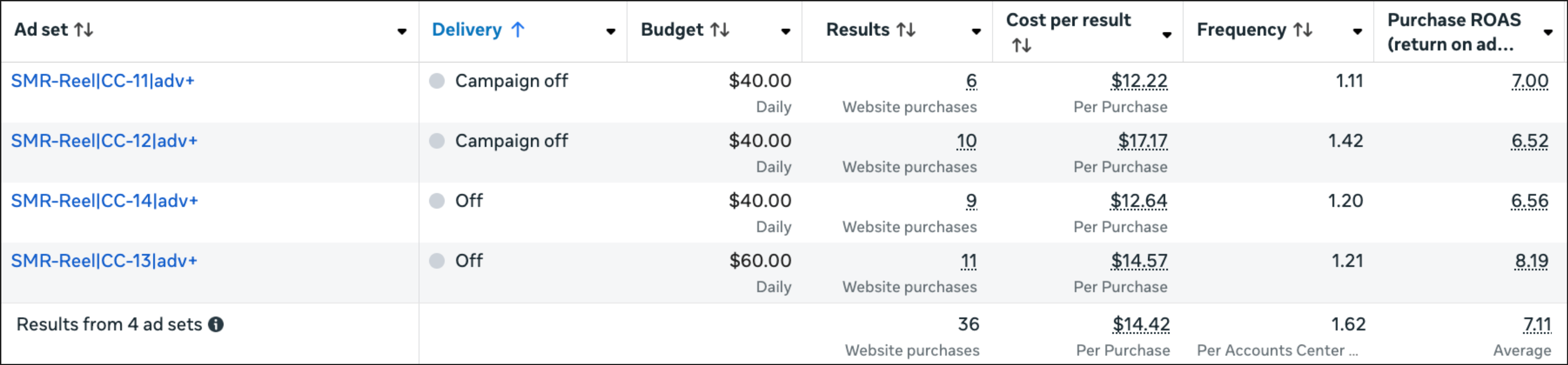
5. Retargeting is important for e-commerce because it brings back users who have already shown interest — viewed a product, added it to their cart, or interacted with the brand. This audience is most likely to make a purchase, so retargeting allows you to reduce CPA, increase ROAS, and boost overall sales without increasing your cold traffic budget.


What Happened with iOS 14 — and Why It Shocked Performance Marketing
When Apple released iOS 14, it introduced App Tracking Transparency (ATT).
In simple terms, users now had to opt in to being tracked across apps and websites. Most people chose not to.
Overnight, advertisers lost a significant amount of tracking data.
Meta could no longer see conversions clearly.
Attribution became delayed and incomplete.
Lookalike audiences weakened.
Optimization became less precise.
ROAS dropped for many brands — not because ads stopped working, but because visibility into performance decreased.
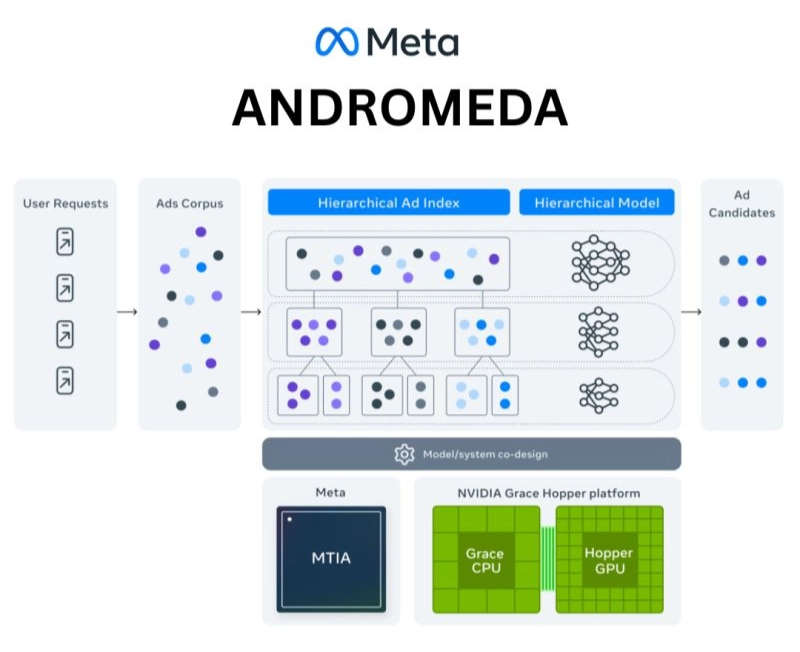
What Is Meta Andromeda — and Why It Changed Advertising
Meta Andromeda is the new AI architecture behind Meta’s ad system.
It decides who sees your ad, which creative they see, and how much you pay — all in real time, using advanced neural networks.
Before, advertisers relied heavily on audience targeting.
Now, targeting matters less. Creative and funnel structure matter more.
Meta has become a creative-driven auction.
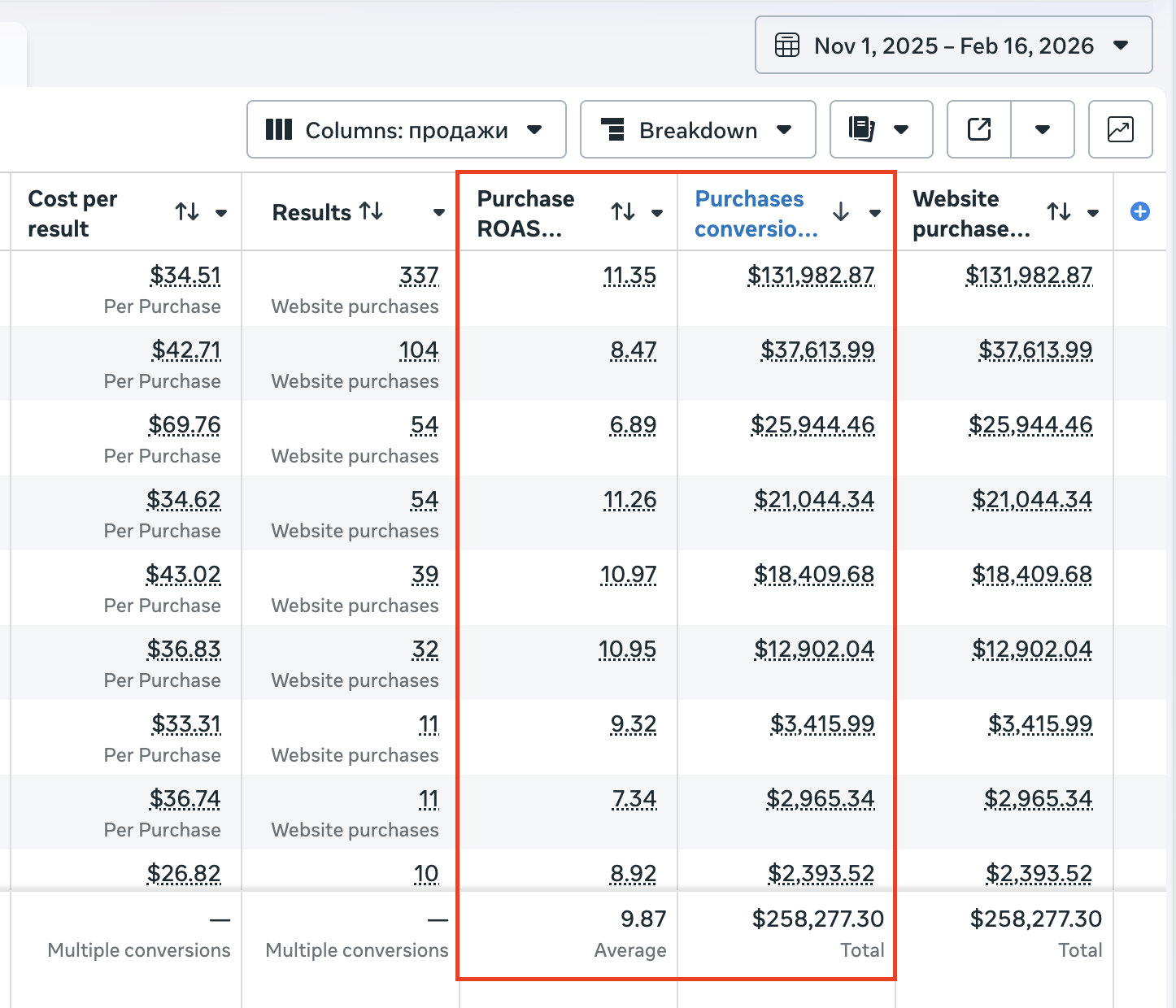
Despite major industry changes, we continue to maintain 8–9+ ROAS across multiple projects.
But we don’t chase ROAS. Because ROAS is not what scales a business — unit economics, contribution margin, and LTV do.
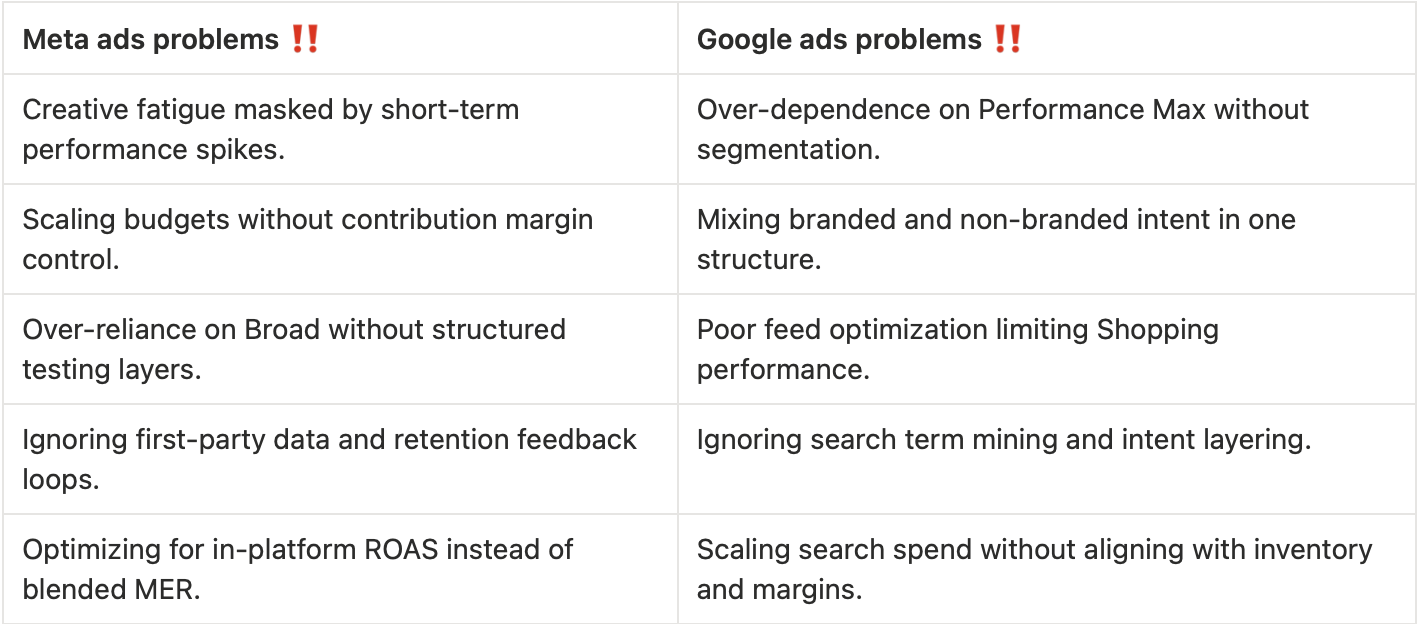
After conducting more than 210 Meta and Google Ads audits last year, here are the conclusions we can confidently draw. (By the way, here’s an example of how our visual audits look 👇)
from $30k to $100k per month, testimonial from Jenn👇
An internal creative production and iteration engine designed to identify and scale profitable ad concepts.
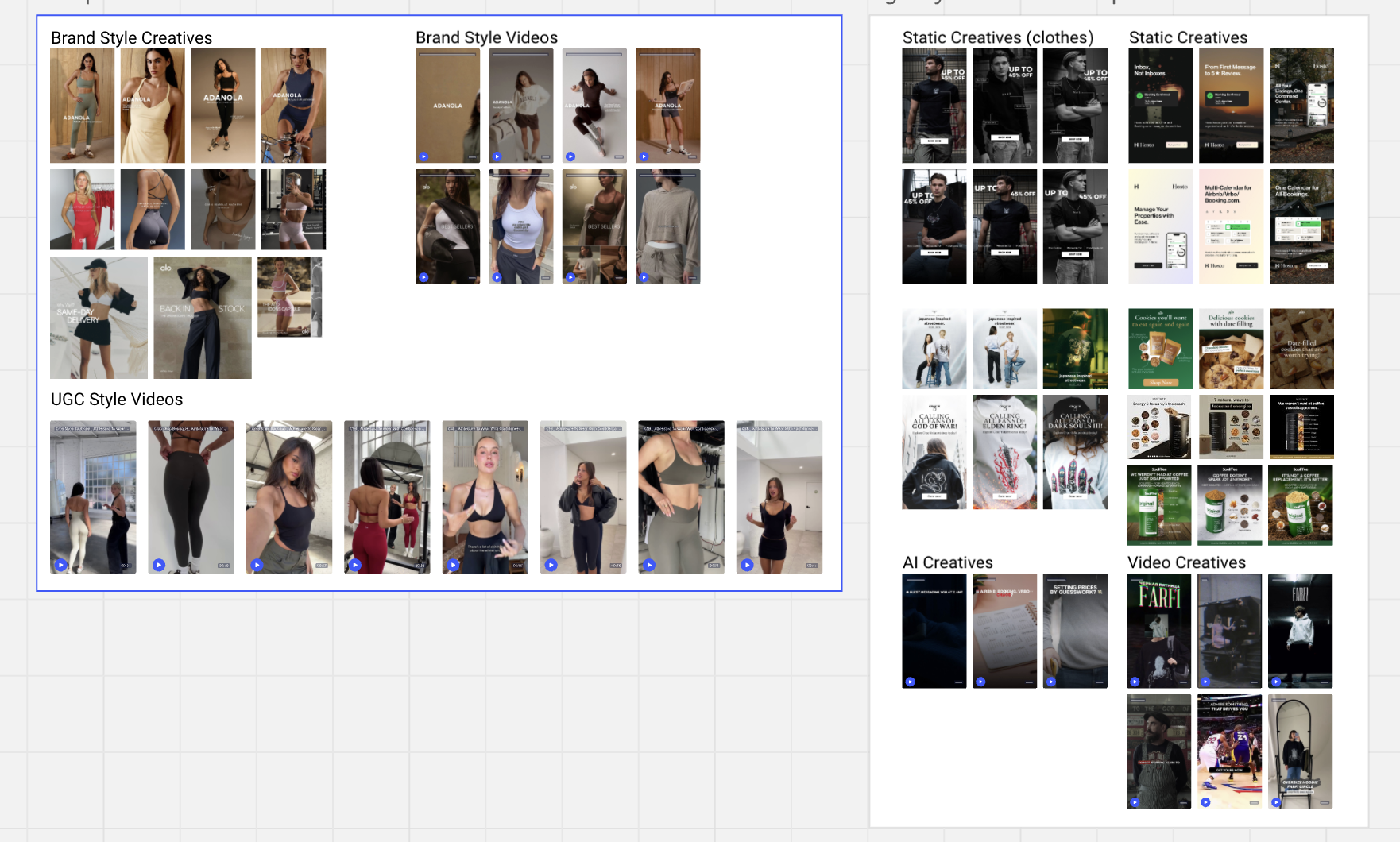
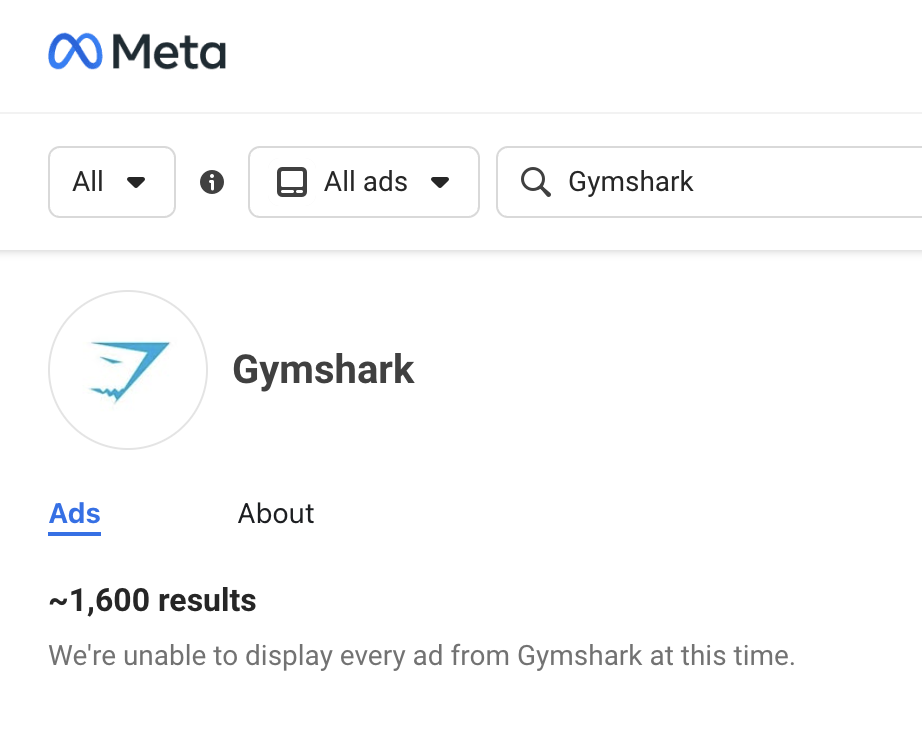
Andromeda fundamentally changed ad account dynamics — and if you’re running fewer than 100 active ads, that’s a problem. Meta is now a volume-driven, creative-iteration environment, and without enough variations, you’re simply limiting the algorithm’s ability to scale.
Competitor analysis and preparation for the creative strategy are the most critical stages of the process, allowing us to clearly differentiate from competitors and significantly increase the probability of finding winning creative combinations in advertising 👇
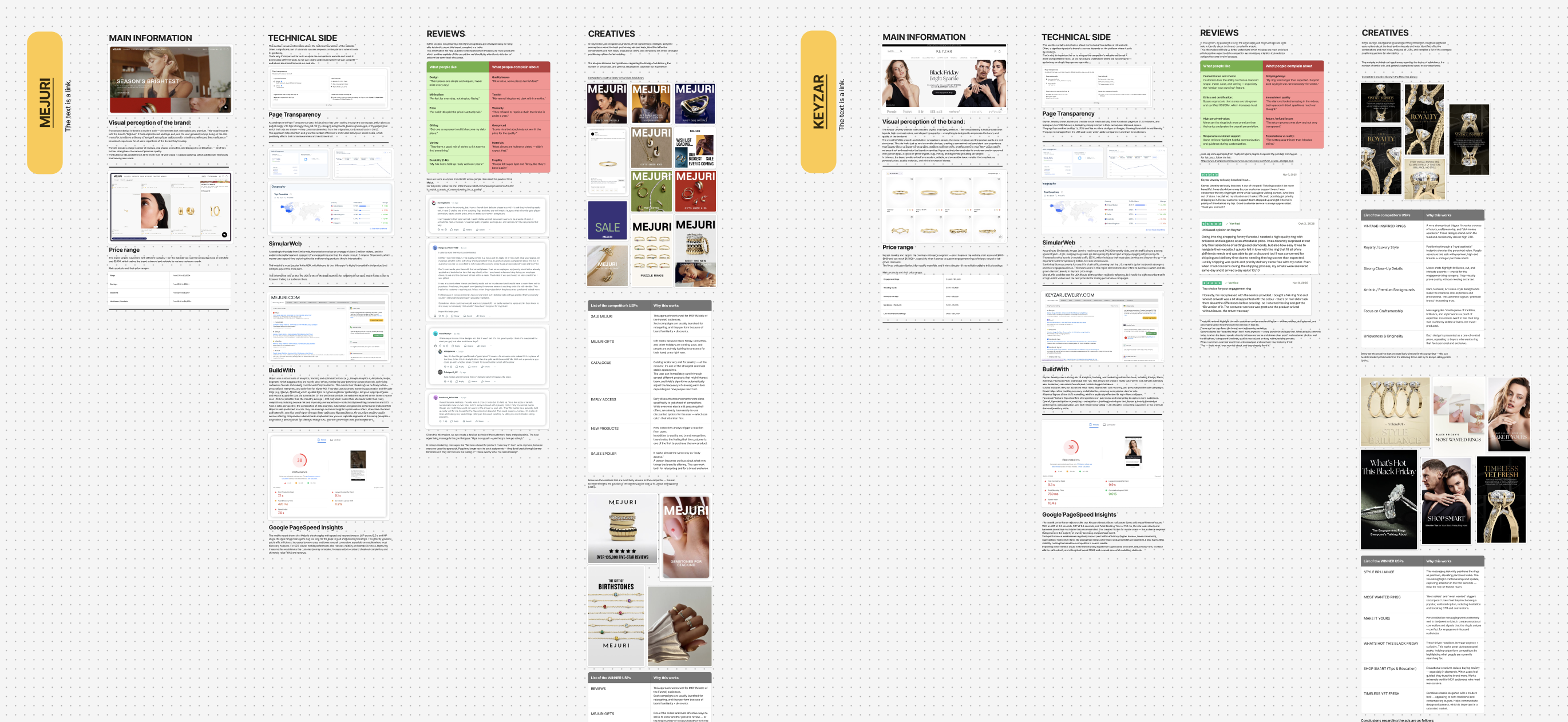
Our Creative Strategy Framework: From Research to Scalable Winners
Scaling fashion brands in 2026 is no longer about “making ads.
”It’s about building a structured creative system.
Here is how we approach it — step by step.
1. Competitor & Market Intelligence
Every creative strategy begins with clarity.
We analyze:
- Direct competitors inside Meta Ad Library
- Their positioning and value propositions
- Repeated messaging patterns in the niche
- Funnel structure: what they show to cold vs warm audiences
The goal is not to copy.
The goal is to identify saturation patterns and uncover strategic gaps.
Differentiation starts with understanding the battlefield.
2. Creative Angle Development & Hypothesis Mapping
After research, we build structured creative hypotheses.
We define:
- 5–10 core creative angles
- Customer pain points
- Customer desires
- Emotional triggers
- Rational proof elements
Each ad concept must have a strategic purpose.
We don’t create “videos.” We test angles.
This increases the probability of discovering scalable winners.
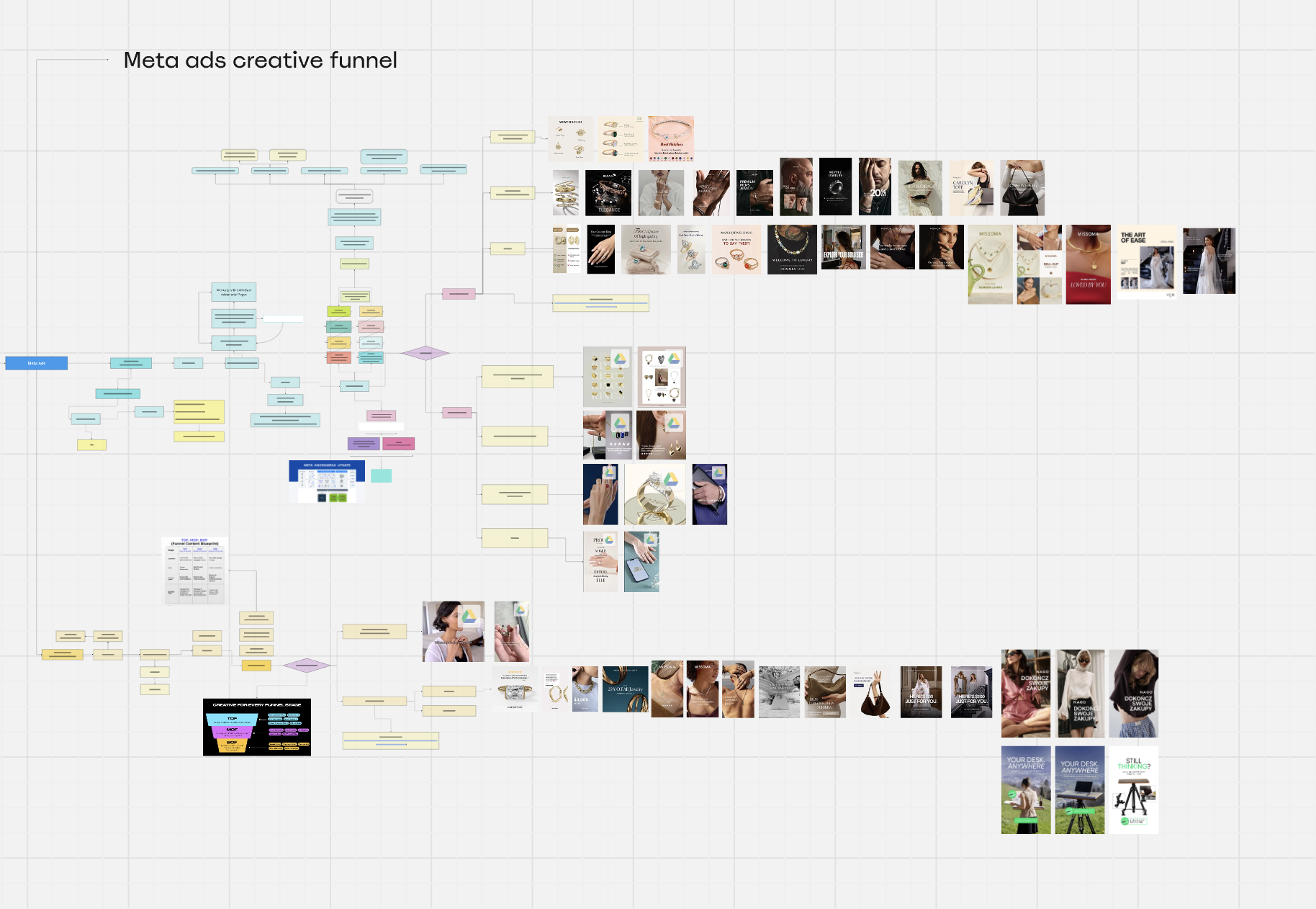
3. Funnel Mapping & Creative Segmentation
Before production, we map the funnel:
- Top of Funnel (TOF) - is where attention is created and the problem is introduced. At this stage, the audience is often unaware or only partially aware of the brand. The goal is not to sell immediately, but to spark curiosity and position the brand correctly. This includes emotional storytelling, strong pattern interrupts, educational hooks, lifestyle-driven visuals, or messaging like “Why your current X isn’t working.” The focus is on grabbing attention and shaping perception.
- Middle of Funnel (MOF) - is where trust is built and consideration begins. The audience already knows about the brand, but needs validation before moving forward. Here we introduce product benefit breakdowns, comparisons with competitors, social proof, reviews, founder stories, and behind-the-scenes content. The purpose is to differentiate and reinforce credibility, helping the customer feel confident in their decision.
- Bottom of Funnel (BOF) - is where conversion happens. At this stage, the customer is close to purchasing but may still have objections. The creative becomes more direct and offer-driven. This includes limited-time promotions, bundle explanations, testimonials with strong proof, and objection-handling messaging. The goal is simple: remove hesitation and reinforce the decision to buy.
Creative without funnel segmentation leads to mixed signals and lower efficiency.
Different levels of awareness require different messaging.
4. Production Brief & Structured Testing
We prepare clear creative briefs (not vague ideas):
- Hook variations
- Messaging structure
- Proof elements
- CTA format
- Visual references
We launch creatives in structured testing clusters — not randomly.
Iteration is intentional.
5. Identifying Winners
A winning creative is not defined by CTR alone.
We evaluate:
- CPA
- Contribution margin
- MER impact
- Retention signals
- Scaling stability
Only concepts that perform economically move to scaling.
Only increasing AOV and systematically improving repeat purchases (LTV) will sustainably grow your brand’s profitability.
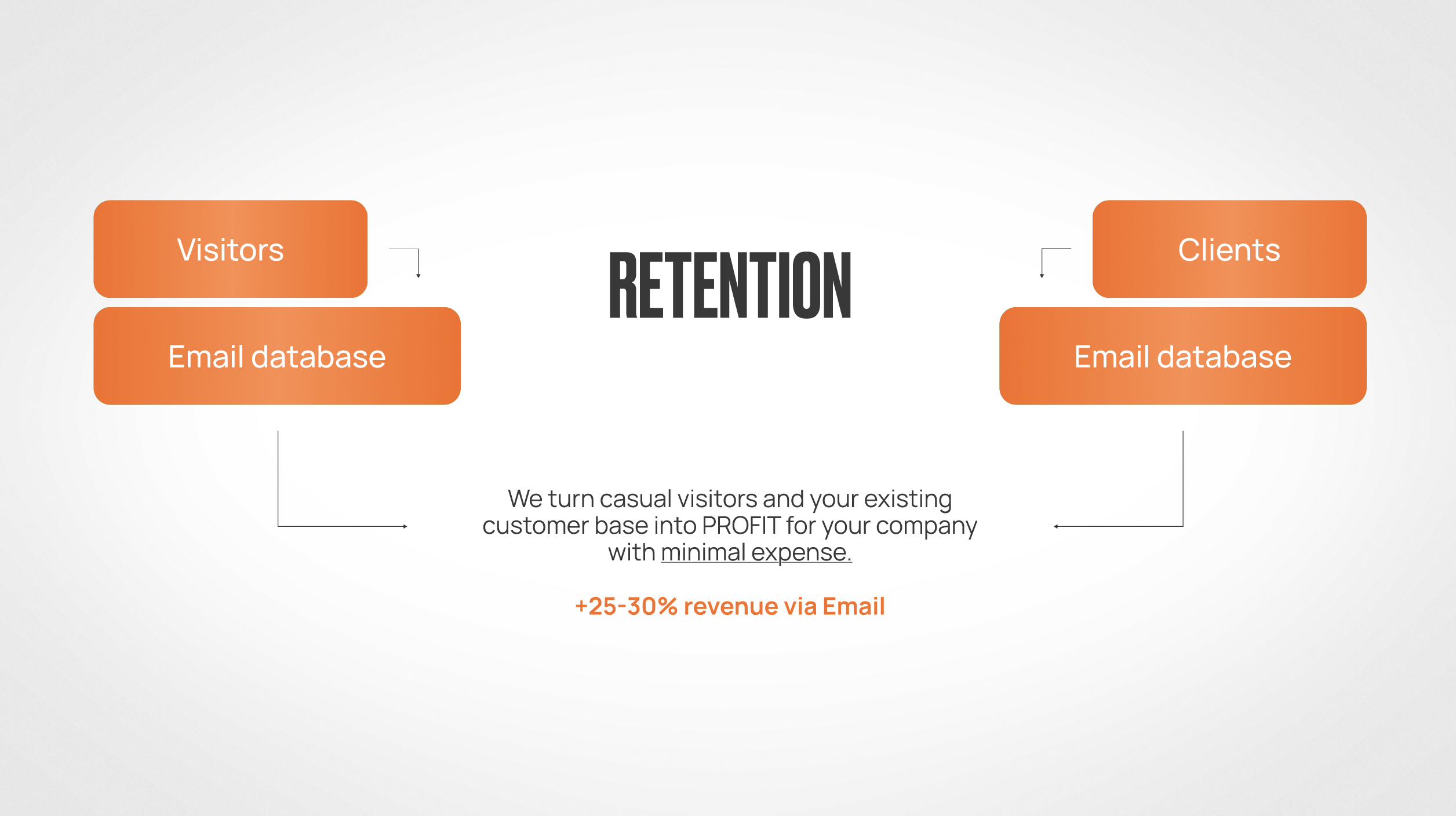
Email marketing is one of the most effective channels for direct communication with potential and existing customers. Its main goal is to "nudge" those who have already shown interest in the brand, bring the audience back to the site, and increase the overall conversion rate.
This channel complements the main traffic sources — Meta Ads/Google Ads, providing a full omnichannel funnel.
Why is this critically important?
For clothing/accessory brands, email marketing in Klaviyo is an integral part of the launch. It allows you to:
- Warm up the audience after the first contact.
- Bring back users who didn’t complete their purchase.
- Generate repeat sales through automation.
- Increase LTV (lifetime value) of customers.
📈 With proper implementation, email marketing can generate up to 30% of a brand's total revenue in the medium term.
Which flows can be added at the start?
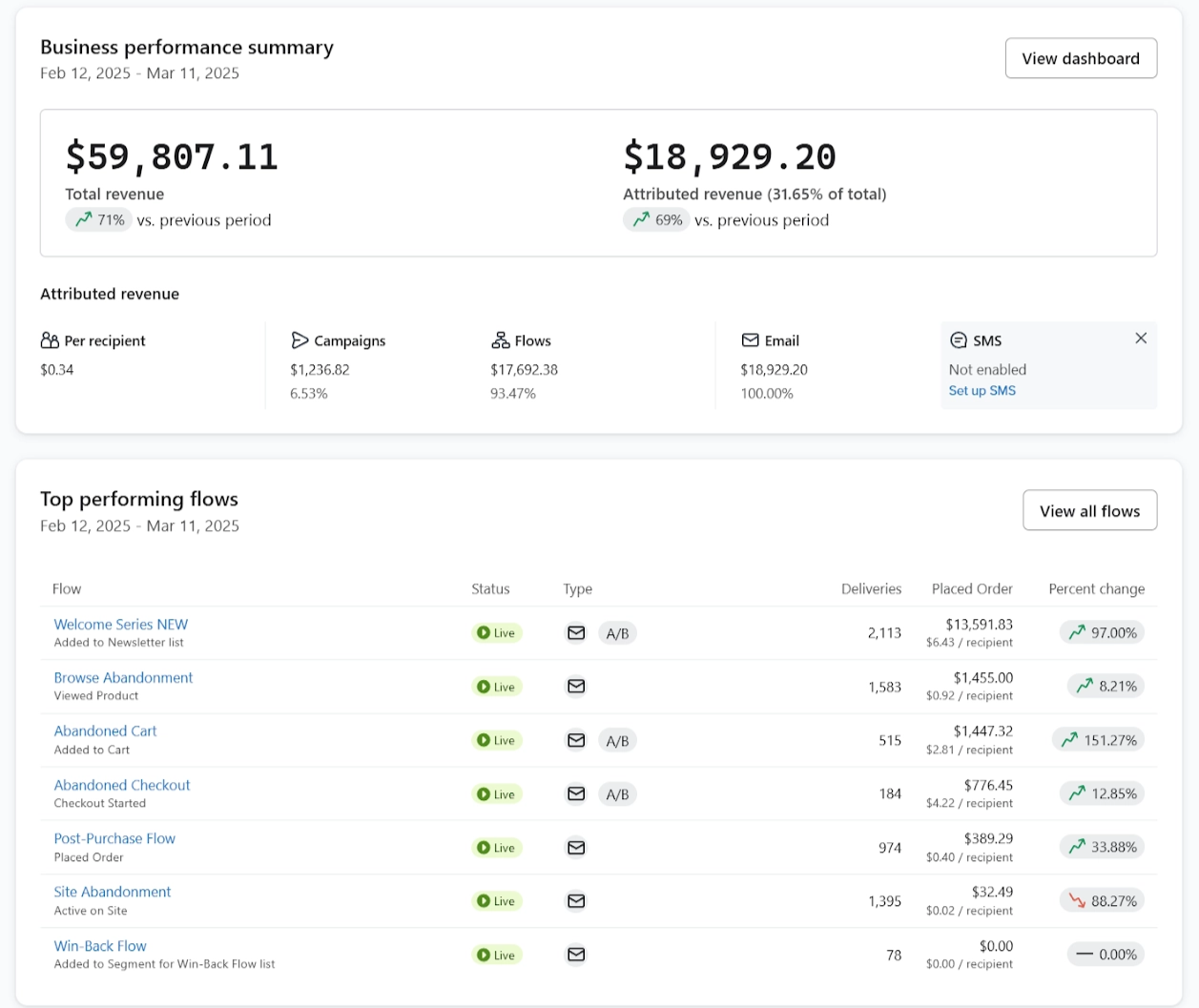
1. Welcome Series Flow - one of the most efficient automation.
The first email after subscription to the newsletter. The goal is make a good first impression, and offer a compelling deal (e.g., 10% off the first order).
In this series, we also present the best sellers, the brand’s philosophy, its uniqueness, and real customer reviews.
2. Browse Abandonment Flow
If a user browsed products but didn’t add them to the cart, we send a gentle reminder about the items they showed interest in.
The goal is to nudge them into action, give more context, or show what other customers are choosing. This is especially relevant for MÍRONS, where decisions are often based on emotional resonance.
3. Abandoned Cart Flow
When a customer adds an item to their cart but doesn’t proceed to checkout — we initiate a 2–3 reminder sequence.
The first email is a simple reminder. The next one includes a soft incentive, such as free shipping or 5% off.
Important: The entire chain is aligned with the brand's visual style and retains the emotional positioning.
4. Abandoned Checkout Flow
This is a separate automation for users who reached the checkout page but didn’t complete the purchase.
The logic:
- 1st email — reminder (no pressure, focusing on the personal nature of the choice).
- 2nd email — additional decision reinforcement: reviews, guarantees, UGC, or social proof.
- 3rd email (optional) — time-limited special offer (e.g., -10% for the next 24 hours).
This is one of the most effective flows in e-commerce.
5. Winback Flow
An automatic sequence for re-engaging inactive customers who haven’t made a purchase in 60–90 days.
Mechanics:
- Email with emotional appeal: "We miss you..."
- Next — selection of new arrivals or best sellers + an exclusive offer to bring them back.
- Optionally: personalized message for segments with higher AOV.
The goal is to activate the base without bringing in new traffic, keeping contact costs minimal.

Some of these flows are probably active in 50% of the projects we onboard.
However, setting up a few random reminders with template emails is not enough to make them work.
Truly effective automations emerge from experience and A/B testing with different audience samples.
🔁 These flows create the foundation for automated traffic and customer base management. They allow you to make the most of each click and build long-term relationships with customers.
Over time, the funnel can be expanded with additional chains:
- Post-purchase Series — confirmation, care instructions for products, repurchase.
- Cross-sell / Upsell Flows — personalized selections based on previous purchases.
- Back in Stock / Price Drop Alerts — to bring back interested users.
Email Campaigns:
Alongside flows, we launch regular email campaigns to maintain contact and stimulate repeat sales.
Formats:
- Promo campaigns for holidays and events: Mother’s Day, Black Friday, new collections.
- Round-up emails: season’s bestsellers, new arrivals, style selections.
- Brand news: designer stories, behind-the-scenes, new showrooms/collaborations.
What results can be achieved with a properly set-up email funnel?
(See below for photos from accounts we have personally worked with / worked with before)
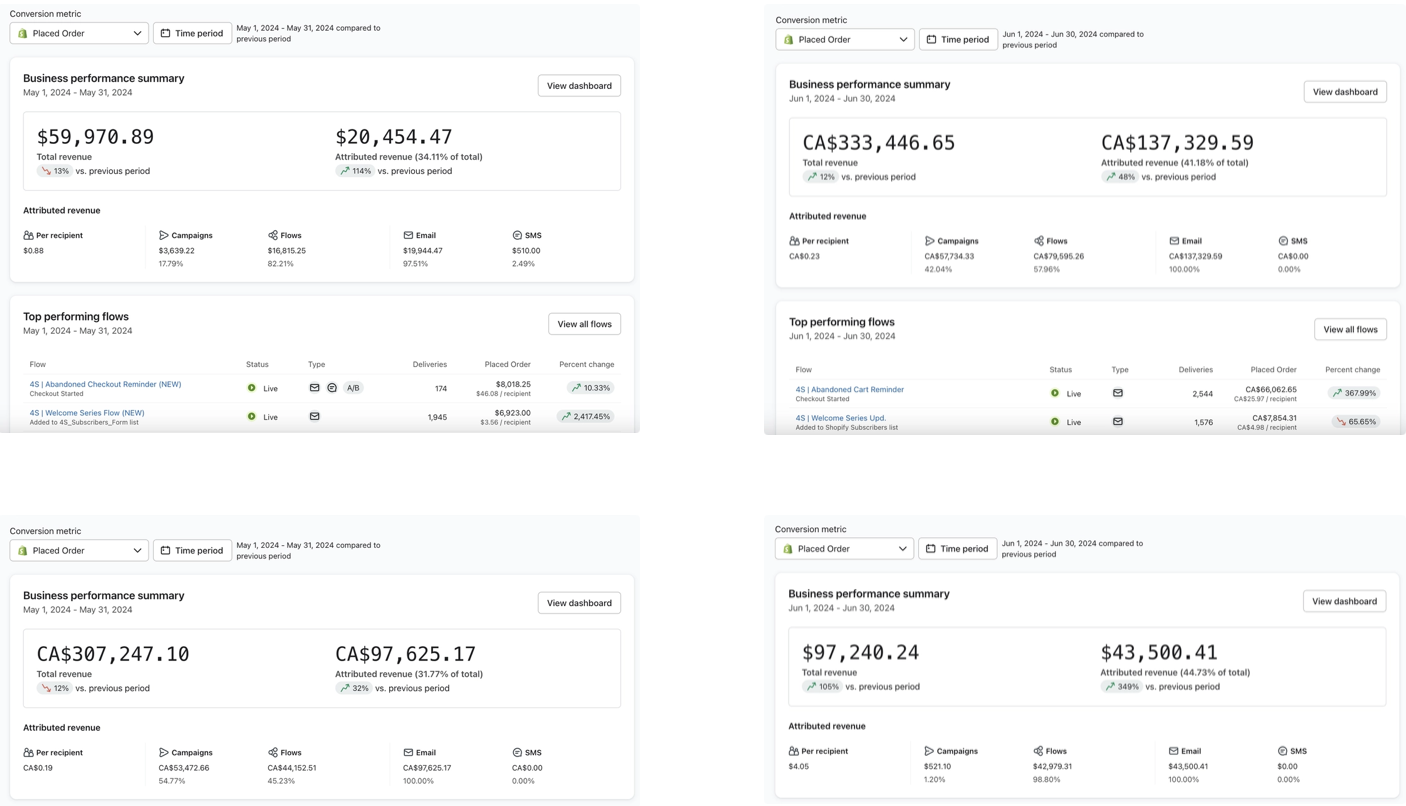
$1.7 million for a year's work, testimonial from Gabriela👇
Stop looking for quick fixes and secrets that create the illusion of results.
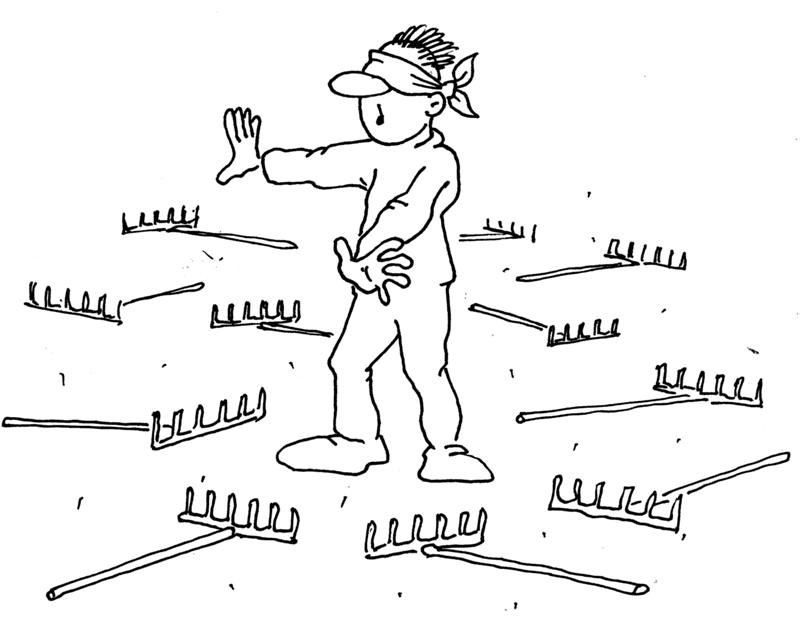
Every hypothesis test or "unique" idea is breaking your profitability, leaving your brand stagnant. Sales velocity and volume aren’t growing — they’re even declining.
- A new media buyer who’s burned through your budget
- A marketer who isn’t working with a strategy
- Email funnels that barely bring in 5-15%
- A creative development factory that isn’t driving sales
You’re stuck in a cycle of experimenting, but not scaling.